

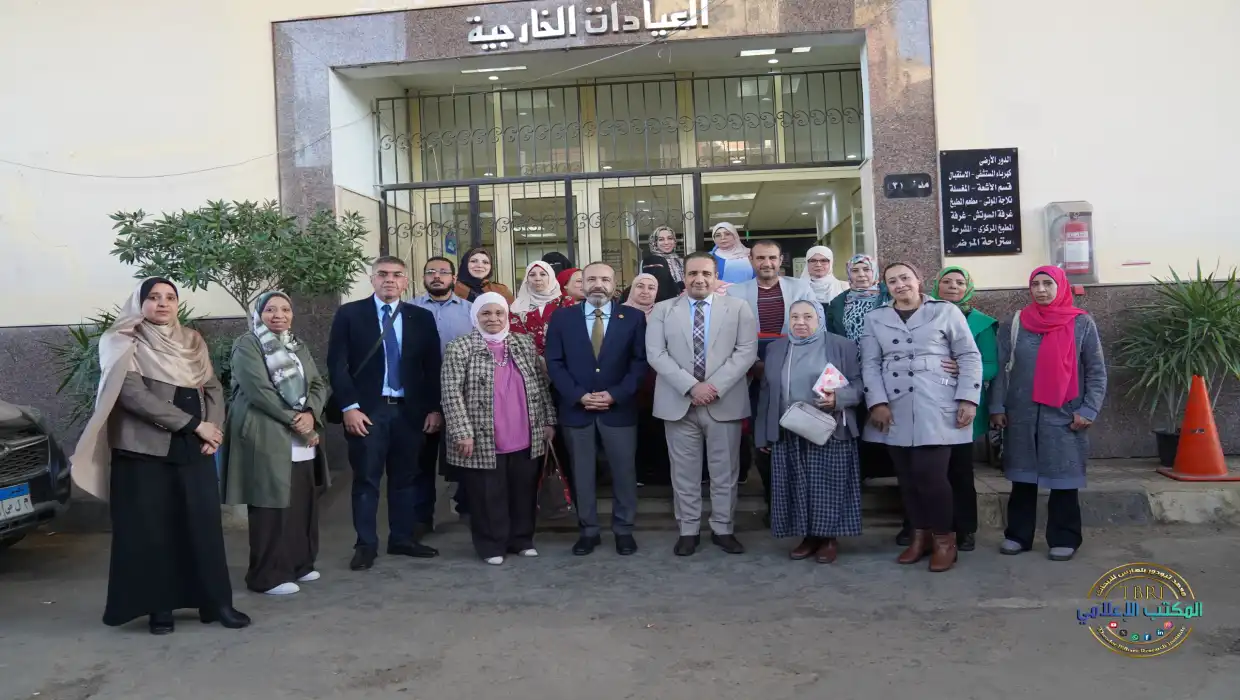
Theodor Bilharz Research Institute conducts a High-Level Visit to the National Liver Institute in Menoufia: Institutional Cooperation and Steps Towards Accreditation
As part of Theodor Bilharz Research Institute's strategy to strengthen scientific and medical partnerships with specialized institutions within Egyptian universities and expand cooperation to serve the development of health and research services, a high-level delegation from the institute visited the National Liver Institute at Menoufia University to congratulate it on receiving full accreditation from the General Authority for Accreditation and Healthcare Regulation (GAHAR). GAHAR recognizes the institute as a distinguished national model in implementing quality and health governance systems.
The delegation was headed by Professor Ahmed Abdel Aziz, Director of Theodor Bilharz Research Institute, and was received by Professor Osama Hegazy, Dean of the National Liver Institute at Menoufia University. Professor Hegazy expressed his pleasure at the visit, emphasizing that it reflects the depth of scientific ties between the two institutions and the importance of strengthening cooperation and exchanging expertise among Egyptian medical institutions to support the development of the healthcare system.
The delegation included a select group of leaders and experts from various administrative, clinical, and technical departments and units at Theodor Bilharz Research Institute. Among them were: Prof. Hanan Ali Sayed, Head of the Quality and Patient Safety Unit; Prof. Khalda Galal Radwan, the Consultant for Quality; Dr. Mohamed Maher, Executive Director of the Hospital; Dr. Moshira Ismail, Hospital Director; Dr. Sara Sayed and Dr. Rasha Gad from the Quality Team; Dr. Dina Eid Bishr, representing the Infection Control Unit; Dr. Hend Atwa, Quality Officer in the Hematology Research Department; Dr. Mohamed Saeed, Head of the Occupational Safety and Health Committee; and Mr. Amr Yahya, Assistant Secretary-General.
Also participating in the visit were several administrative and technical staff members from the Institute, including Eng. Hanan El-Sayed, Director of the Engineering Department, accompanied by a team of three engineers; and Ms. Hanaa Rabie, Head of Nursing Staff, accompanied by several supervisors from critical departments, including Intensive Care and Operating Rooms, the Operating Room Quality Supervisor, the Inpatient Department Supervisor, and the Emergency and Reception Supervisor. Walaa El-Messiri, Head of Personnel Affairs at the hospital, and Ms. Rasha Najm and Ms. Marwa Saeed from the Human Resources Department, were present, reflecting the institute's focus on strengthening the integration between medical, administrative, and organizational aspects as key elements in developing and sustaining institutional performance.
The visit included an extensive meeting between the delegation from Theodor Bilharz Research Institute and the leadership of the National Liver Institute and the quality assurance teams. The meeting reviewed the accreditation process in its various stages, the frameworks that facilitated unified efforts and achieved the highest levels of institutional readiness, the most significant challenges faced by the teams, and the organizational mechanisms implemented to ensure compliance with standards and quality requirements. This ensures the continuity of quality medical services and enhances the patient experience.
In this context, Professor Ahmed Abdel Aziz, Director of Theodor Bilharz Research Institute, emphasized that the institute prioritizes developing its quality assurance system and ensuring patient safety during this phase, considering it a fundamental pillar for improving institutional performance and raising the level of healthcare and research services provided. He explained that the institute is working to expand its cooperation with accredited and reference institutions and to build direct communication channels between teams within major healthcare institutions. This will facilitate the exchange of visions and practical experiences and unify concepts related to quality implementation.
He pointed out that adopting quality standards is not a phase tied to a specific file or procedure, but rather an integrated institutional approach based on continuous development, enhancing the efficiency of human resources, improving work processes, and strengthening governance and organizational discipline. This directly impacts the quality of services provided and the patient experience.
He added that these steps come as Theodor Bilharz Institute prepares to register with the General Authority for Accreditation and Health Control in preparation for accreditation. This will contribute to developing the health and research services provided within the institute and enhance its position as a national reference institution that combines therapeutic services with research excellence according to accredited and sustainable standards.
The visit concluded with field tours inside the National Liver Institute Hospital, followed by technical meetings between specialized teams from both sides, which addressed the practical aspects of quality management, performance indicators, and procedures control mechanisms, in order to support the continuation of joint coordination and establish a sustainable cooperation path that serves the development of the health system at the national and regional levels.