



A Distinguished symposium at Theodor Bilharz Research Institute Reinforces the Integration of Scientific Research and Sustainable Development Goals
As part of a clear strategic direction toward enhancing the quality of research outcomes, and within the efforts of Theodor Bilharz Research Institute (TBRI) to strengthen its research and societal role while keeping pace with international standards of institutional excellence, the Institute hosted a distinguished scientific symposium under the patronage of Professor Dr. Ahmed Abdel Aziz, Director and Chairman of the Institute.
The symposium was jointly organized by the Community Service and Environmental Development Committee and the International Ranking and Research Performance Evaluation Committee under the title: “Sustainable Development Goals and Scientific Ranking: Toward an Integrative Vision for Institutional Excellence.” The event reflected a strategic vision aimed at linking the quality of scientific research with the requirements of global rankings and emphasized the Institute’s commitment to establishing a modern research culture based on the integration of scientific impact and developmental dimensions.
During his lecture, Dr. Hassan Flefel, researcher at the Environmental Research Department, discussed the practical dimensions of linking scientific research to the United Nations Sustainable Development Goals (SDGs). He stressed that directing research toward serving these goals is no longer optional, but rather a necessity and one of the key factors in maximizing the real impact of research and enhancing its scientific and societal influence.
He explained that orienting studies toward addressing developmental challenges directly contributes to increasing opportunities for publication in prestigious international journals and raising citation rates, which positively reflects on institutional research performance indicators. He further noted that research aligned with the SDGs receives growing attention from the international scientific community, opening broader horizons for research collaboration and cross-border partnerships, while granting research institutions a stronger and more influential presence on the global scientific research map.
Dr. Flefel also elaborated on practical mechanisms through which research plans can be aligned with the sustainable development agenda. He emphasized the importance of designing research topics that respond to real challenges in areas such as health, environment, and energy, in addition to incorporating clear indicators to measure the developmental impact of research. He affirmed that adopting such an approach not only improves international rankings but also strengthens the institution’s role as a center of expertise that supports decision-makers and serves society.
For his part, Mr. Yasser Abdel Fattah Salem, General Director of Administrative Affairs at the Petroleum Research Institute, delivered a comprehensive analytical presentation on international ranking systems for scientific institutions, reviewing the most prominent criteria and indicators used to evaluate institutional research performance.
He emphasized that linking scientific output with the United Nations Sustainable Development Goals has become a central element in many international rankings, as it reflects institutions’ commitment to their societal and humanitarian roles.
He also highlighted the growing importance of patents as one of the key indicators of innovation, explaining that registering high-quality patents enhances the competitiveness of research institutions and strengthens their position in international rankings, particularly the SCImago ranking, which has become one of the most important reference indicators for evaluating research and innovation performance.
He pointed out that institutions capable of transforming their research outputs into practical applications and marketable innovations achieve significant progress in global rankings, noting that the integration between scientific research and industrial innovation represents a fundamental pillar for building a knowledge-based economy.
The symposium witnessed notable interaction from attendees, opening the door to rich discussions on the best ways to implement the proposed strategies within academic and research institutions, as well as mechanisms for developing research systems in a way that balances academic quality and institutional excellence within international ranking frameworks, thereby enhancing institutions’ ability to compete globally.
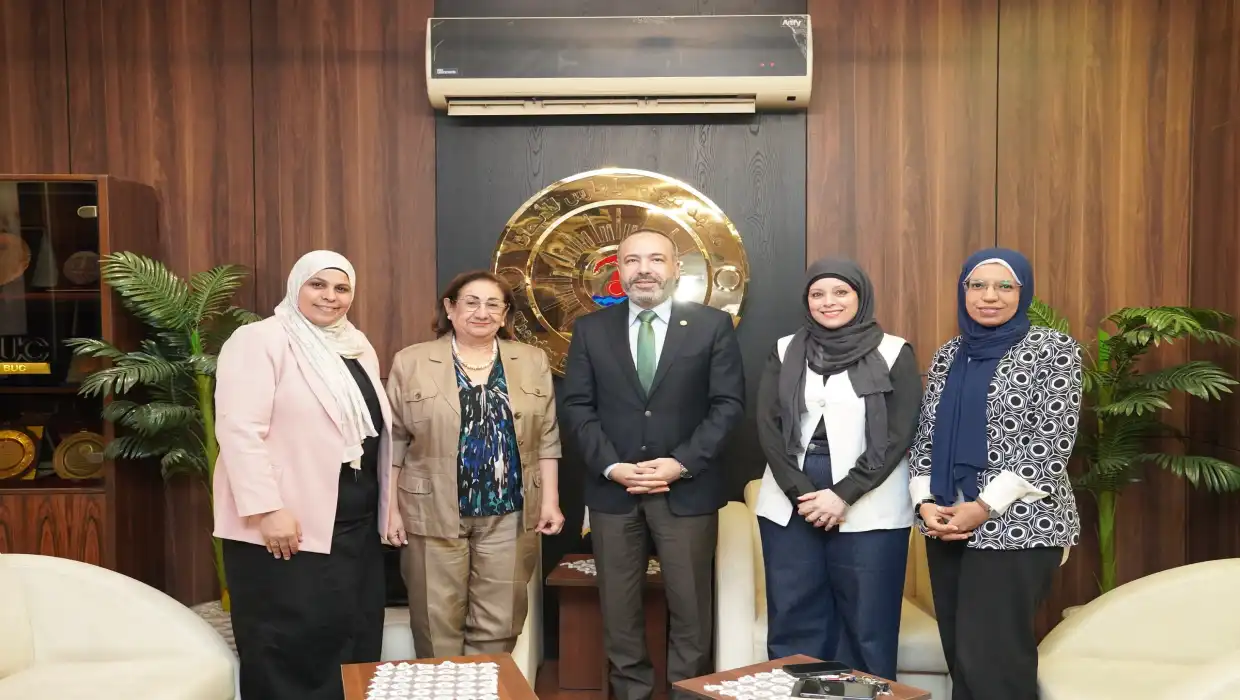
On the sidelines of the event, Dr. Ahmed Abdel Aziz, Director of the Institute, welcomed Ms. Ola Lawrence, Advisor to the Egyptian Knowledge Bank (EKB), during a visit aimed at discussing avenues of cooperation between Theodor Bilharz Research Institute and the Egyptian Knowledge Bank regarding the Institute’s journal, which was recently launched through the EKB platform.The discussions also included organizing a number of seminars and workshops to be delivered by the Egyptian Knowledge Bank for the Institute’s researchers in several fields, including artificial intelligence, scientific writing, and introducing the Bank’s capabilities as one of the leading platforms offering diverse services to professionals in the academic and research sectors.
In a statement reflecting a clear leadership vision, Professor Dr. Ahmed Abdel Aziz, Director of Theodor Bilharz Research Institute, affirmed that the Institute is steadily moving toward developing its research system in accordance with the latest international standards, with a focus on maximizing the applied impact of research and supporting all initiatives that strengthen the connection between scientific research and sustainable development goals.
He explained that the current phase requires concerted efforts among researchers and various administrative sectors to adopt an integrated institutional approach that supports innovation and elevates the quality of scientific output, thereby positively impacting the Institute’s position in international rankings and reinforcing its role as a leading research institution contributing effectively to community service and development plans.
He further indicated that the coming phase will witness greater emphasis on innovation and the integration of research efforts in a manner that consolidates the Institute’s leadership as a pioneering research institution at both the regional and international levels.
The event concluded with an affirmation that achieving institutional excellence is no longer based solely on the volume of scientific output, but rather on its impact and its connection to sustainable development issues. Excellence has become a direct result of integrating scientific research with practical application in a way that creates tangible societal impact and reinforces the position of research institutions as key partners in building a more sustainable and progressive future.
Recent News



Meta
- Scientific Research and SDGs, a symposium organized by TBRI
Tags
- معهد تيودور بلهارس للأبحاث Theodor Bilharz Research Institute TBRI الدكتور أحمد عبد العزيز Prof. Dr. Ahmed Abdel Aziz التنمية المستدامة sustainable development أهداف التنمية المستدامة Sustainable Development Goals SDGs التصنيف الدولي international rankings التصنيف العالمي للمؤسسات البحثية global research institution rankings الأداء البحثي research performance تقييم الأداء البحثي research performance evaluation التميز المؤسسي institutional excellence البحث العلمي scientific research جودة البحث العلمي research quality تأثير البحث العلمي research impact التأثير المجتمعي للبحث العلمي societal research impact الابتكار innovation براءات الاختراع patents SCImago تصنيف SCImago التصنيفات البحثية research rankings التعاون البحثي research collaboration التنمية المستدامة والبحث العلمي sustainable development and scientific research الأمم المتحدة United Nations خدمة المجتمع community service التنمية المجتمعية community development الابتكار العلمي scientific innovation الاقتصاد القائم على المعرفة knowledge-based economy تحويل مخرجات البحث إلى تطبيقات research translation research commercialization Egyptian Knowledge Bank بنك المعرفة المصري EKB الكتابة العلمية scientific writing الذكاء الاصطناعي artificial intelligence TBRI journal مجلة معهد تيودور بلهارس المؤشرات البحثية research indicators التنافسية العالمية global competitiveness التميز البحثي research excellence