
Towards a More Sustainable Future: Theodor Bilharz Research Institute Addresses Climate Change Challenges and Explores Carbon Footprint 

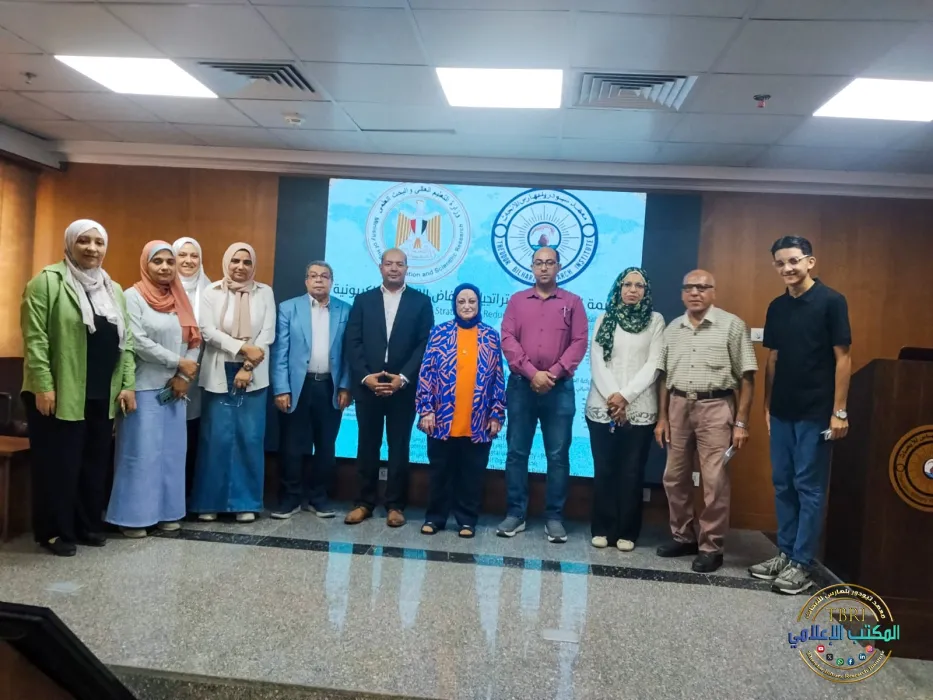
As part of Theodor Bilharz Research Institute’s commitment to raising scientific awareness of climate change and environmental sustainability issues, and under the patronage of Prof. Dr. Ahmed Abdel Aziz, Acting Director of the Institute and Chairman of the Board of Directors, Environmental Research Department, headed by Prof. Dr. Marwa Tamim, organized a scientific lecture entitled “Carbon Footprint and Strategies for Reducing Carbon Emissions.”

The lecture was delivered by Dr. Hassan Felefel, Researcher at Environmental Research Department, as part of the series of scientific activities organized by the Institute’s Climate Change Research Program, technically supervised by Prof. Dr. Nahed Mohamed Ismail. This reflects the Institute’s commitment to harnessing its research and scientific capabilities to address contemporary environmental challenges and to support the development of an institutional culture based on sustainability, the rational use of resources, and the reduction of carbon emissions.

The lecture addressed a number of concepts and key issues related to carbon footprint and climate change, with a focus on understanding the sources of carbon emissions and ways to reduce them, thereby supporting the transition toward more sustainable practices at both the institutional and societal levels. It explored the concept of the Carbon Footprint as a tool for measuring the amount of greenhouse gas emissions resulting from various activities, while explaining the difference between the carbon footprint and the Ecological Footprint. The lecture also introduced the major greenhouse gases, their impacts on the climate system, and the consequences associated with climate change.

Dr. Hassan Felefel also discussed a number of strategies and practices that can contribute to reducing emissions and promoting sustainability, including improving energy efficiency, expanding the use of clean energy sources, increasing afforestation and supporting sustainable agriculture, promoting sustainable transportation, and ensuring the efficient use of resources. He emphasized the importance of integrating environmental considerations into daily and institutional practices.

The lecture was attended by Dr. Belal Ali, assistant professor at the Central Laboratory for Agricultural Climate at the Agricultural Research Center, who delivered a valuable scientific contribution addressing mechanisms for calculating the carbon footprint of individuals, products, and institutions. He also highlighted the differences in emission rates between industrialized and developing countries, while discussing approaches to reducing emissions and working toward achieving carbon neutrality. His contribution enriched the scientific dialogue and stimulated an interactive discussion between the speaker and attendees on ways to address climate change and achieve sustainability.

For his part, Prof. Dr. Ahmed Abdel Aziz, Director of the Institute, emphasized that organizing such scientific events reflects Theodor Bilharz Research Institute’s commitment to keeping pace with environmental and climate issues of national and global priority, as well as strengthening the role of scientific research in providing knowledge and solutions that support the State’s efforts toward sustainable development. He also highlighted the importance of raising awareness of sound environmental practices and linking scientific knowledge with practical application within institutions and society.

He further explained that, through such scientific discussions, the Institute continues to strengthen the connection between scientific research and societal issues and global challenges, while fostering awareness of the importance of climate action. He noted that addressing the carbon footprint from both scientific and practical perspectives, together with the rich discussions and contributions on mechanisms for measuring emissions, reducing them, and achieving carbon neutrality, underscores the importance of integrating expertise and exchanging knowledge in support of sustainability efforts and addressing the impacts of climate change.

Climate change is no longer the responsibility of a single sector; rather, it is a shared responsibility that requires science, awareness, and sustained action.

Meta

  • Towards a More Sustainable Future: Theodor Bilharz Research Institute Addresses Climate Change Challenges and Explores Carbon Footprint 

Tags

  • معهد تيودور بلهارس للأبحاث Theodor Bilharz Research Institute TBRI التغير المناخي climate change البصمة الكربونية carbon footprint استراتيجيات خفض الانبعاثات الكربونية carbon emission reduction strategies الانبعاثات الكربونية carbon emissions الاستدامة البيئية environmental sustainability التنمية المستدامة sustainable development برنامج أبحاث التغير المناخي Climate Change Research Program قسم البحوث البيئية Environmental Research Department الغازات الدفيئة greenhouse gases البصمة البيئية ecological footprint الحياد الكربوني carbon neutrality كفاءة الطاقة energy efficiency الطاقة النظيفة clean energy التشجير afforestation الزراعة المستدامة sustainable agriculture النقل المستدام sustainable transportation الاستخدام الرشيد للموارد rational resource use الممارسات البيئية المستدامة sustainable environmental practices التوعية البيئية environmental awareness العمل المناخي climate action قياس الانبعاثات emissions measurement الانبعاثات من الأنشطة المختلفة activity-based emissions الاستدامة المؤسسية institutional sustainability التحديات البيئية environmental challenges البحث العلمي والبيئة environmental research الدكتور حسن فلفل Dr. Hassan Felefel الأستاذة الدكتورة مروة تميم Prof. Dr. Marwa Tamim الأستاذة الدكتورة ناهد محمد إسماعيل Prof. Dr. Nahed Mohamed Ismail د. بلال علي Dr. Belal Ali المعمل المركزي للمناخ الزراعي Central Laboratory for Agricultural Climate مركز البحوث الزراعية Agricultural Research Center التنمية المستدامة في مصر sustainable development in Egypt
ع