


TBRI Signs Research Cooperation Protocol with Egyptian Centre for Research and Regenerative Medicine
Written by: Mie Mohamed Reda
Photography: Ahmed Magdy
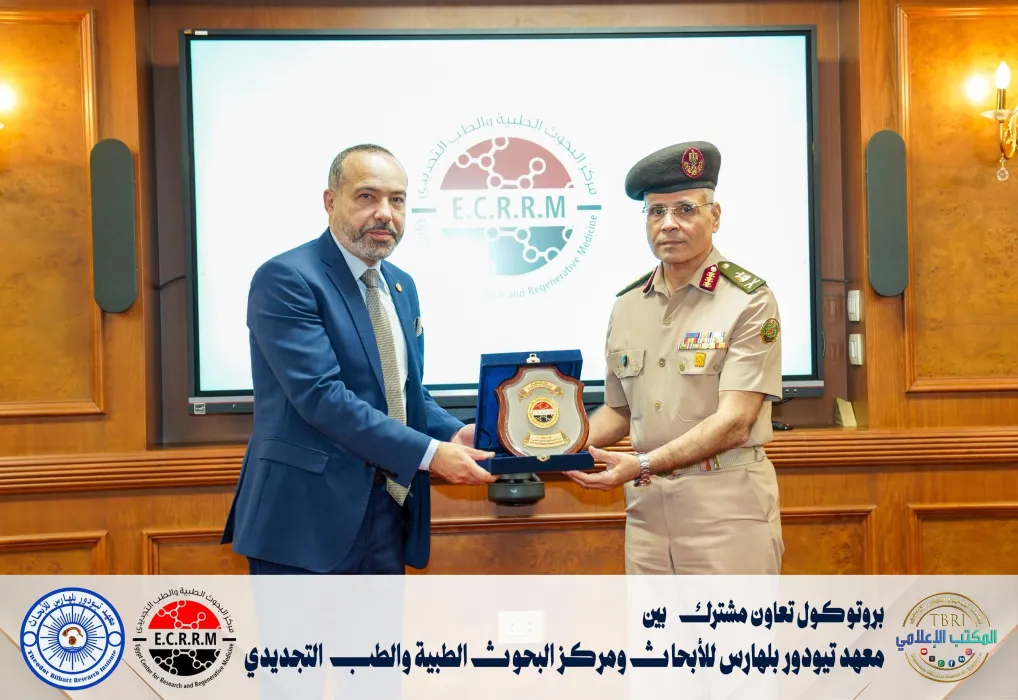
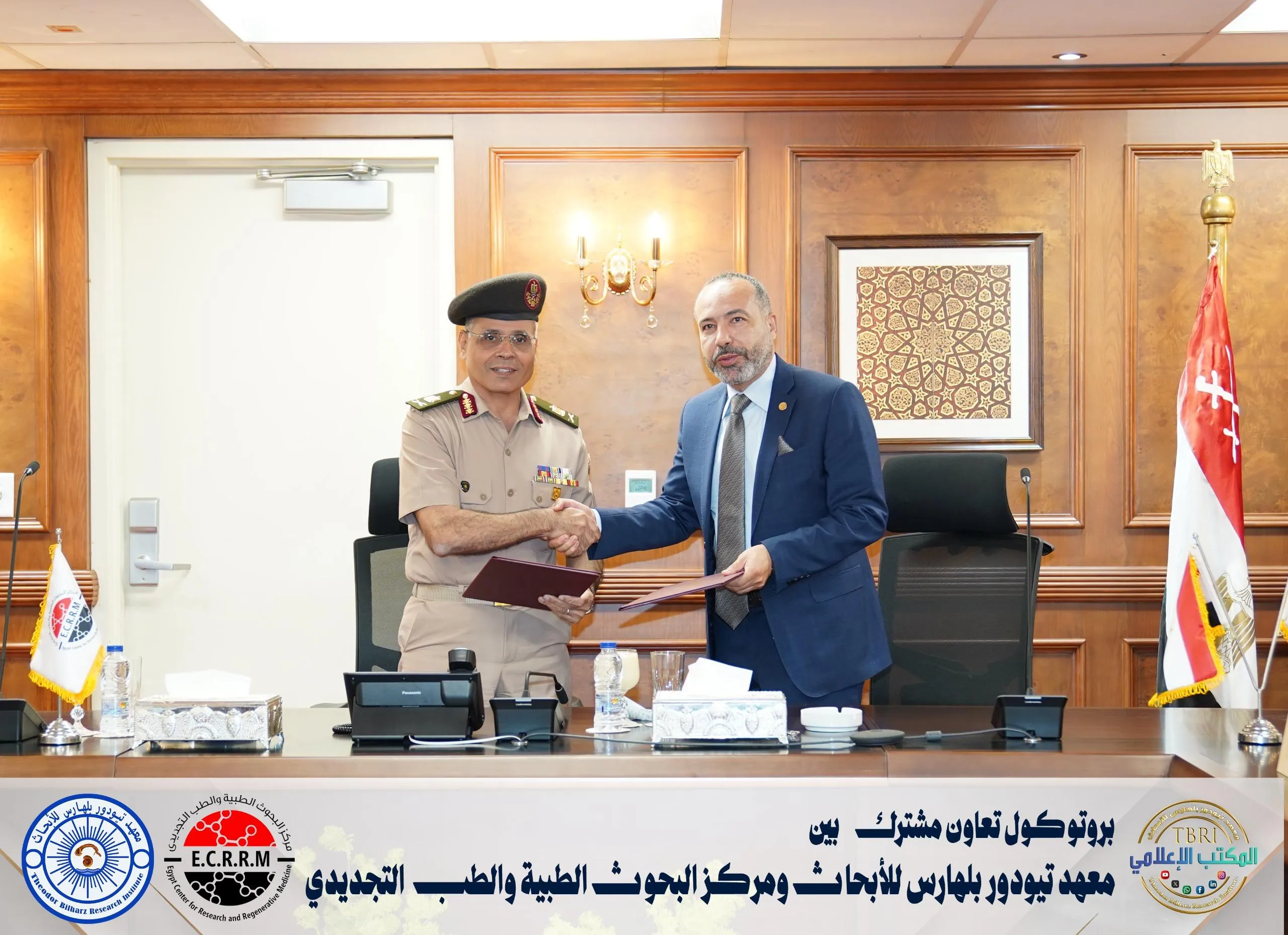
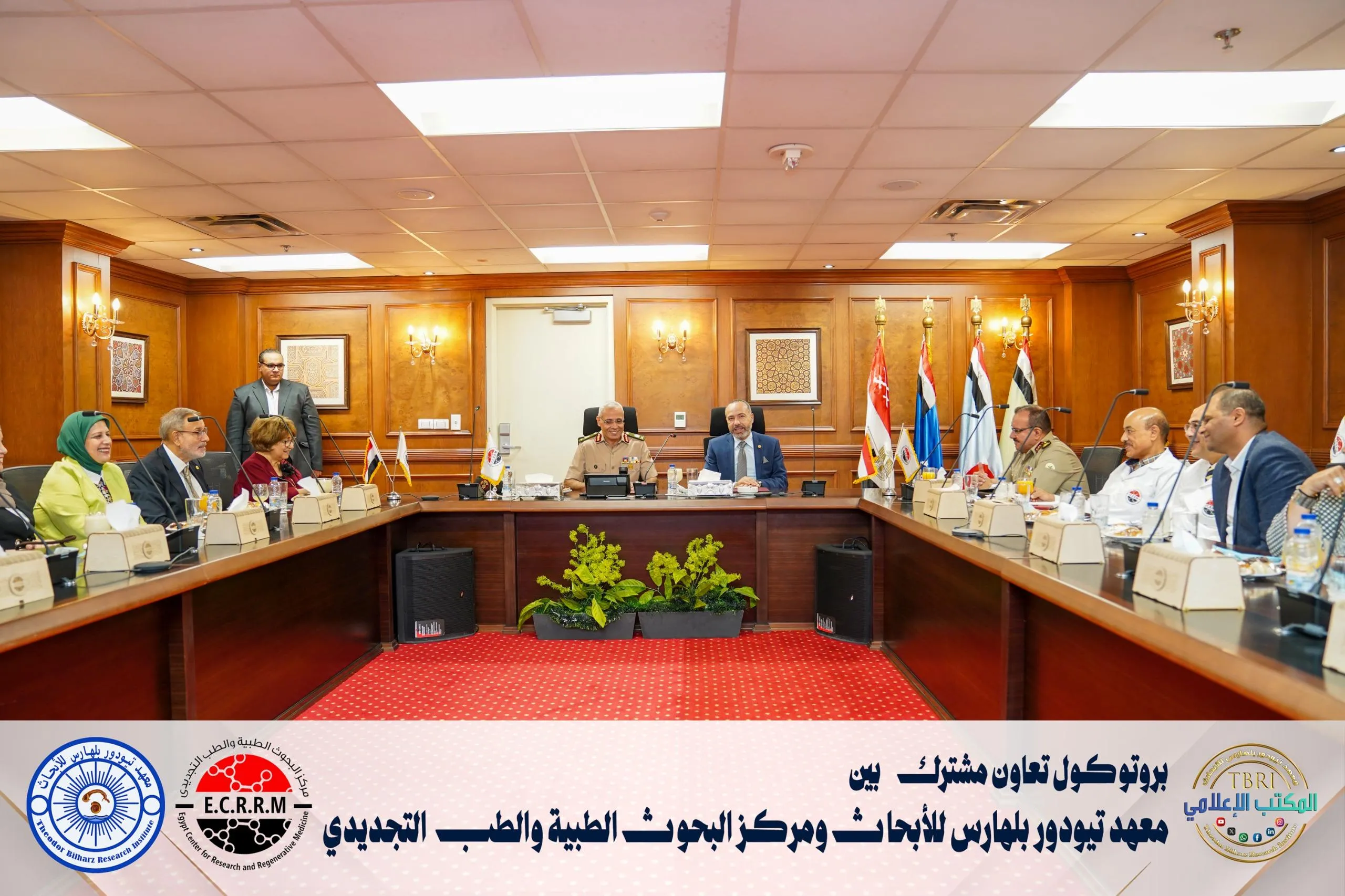
In a step reflecting the Egyptian state's commitment to strengthening integration among scientific and research institutions and harnessing national capabilities to serve development and healthcare priorities, and as part of the shared commitment to establishing an effective institutional partnership that supports the advancement of scientific research and promotes cooperation among national institutions, a cooperation protocol was signed between the Egyptian Research and Regenerative Medicine Center, affiliated with the Ministry of Defense, represented by Major General Dr. Mostafa Mahmoud El-Naqeeb, Executive Director of the Center, and Theodor Bilharz Research Institute (TBRI), represented by Prof. Dr. Ahmed Abdel Aziz, Acting Director and Chairman of the Board.
The protocol aims to strengthen joint cooperation in scientific, research, training, and development fields, broaden opportunities for exchanging expertise and resources, promote innovation, and advance research outcomes and their medical applications.
This collaboration builds on the distinguished scientific standing of both institutions. The Medical Research and Regenerative Medicine Center is one of the research centers affiliated with the Ministry of Defense, working to support and advance research capabilities and medical studies. Meanwhile, Theodor Bilharz Research Institute is a leading scientific and medical institution affiliated with the Ministry of Higher Education and Scientific Research, with extensive experience in biomedical research and development, as well as the diagnosis and treatment of liver, gastrointestinal, kidney, and urinary tract diseases. The Institute also plays an important role in combating parasitic and infectious diseases and their complications, and in advancing applied research addressing healthcare needs.
The protocol establishes a framework for cooperation in implementing joint academic, scientific, research, training, and development projects; exchanging visits and expertise among researchers and specialists; and organizing workshops and training courses to enhance scientific and practical capabilities, particularly among young researchers. Cooperation will also extend to the exchange of expertise in institutional and programmatic academic accreditation, supporting the continuous development of programs and the improvement of institutional performance quality.
The partnership will further encompass the development of laboratory infrastructure, the adoption of modern research technologies, and the promotion of e-learning and distance education in line with rapid advances in medical research and training. In addition, the protocol provides for cooperation between the biobanks of both institutions through the exchange of samples and coded clinical information relating to various diseases, in accordance with applicable regulations. This will broaden access to samples and data required for research studies and support advanced research in drug development and personalized medicine.
The signing of this protocol reflects a strategic direction toward moving beyond the exchange of expertise and resources to developing joint projects with tangible scientific and practical value. It seeks to capitalize on the complementary specializations of both institutions to support modern medical research, strengthen research and technological capabilities, and enhance opportunities to translate research findings into improved diagnostic and therapeutic approaches, thereby serving healthcare priorities and supporting the state's efforts to improve the quality of medical services.
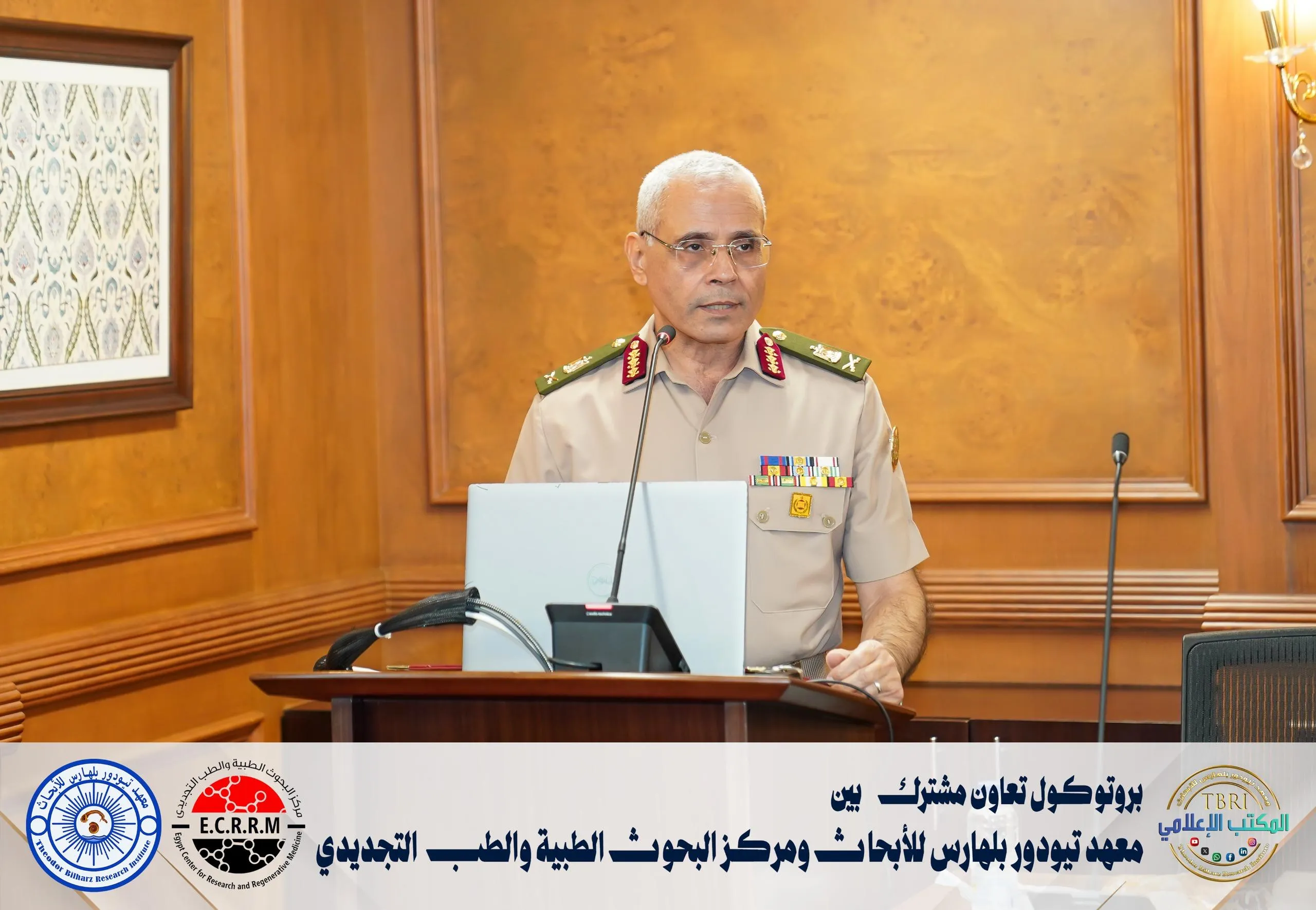
In his address, Major General Dr. Mostafa El-Naqeeb emphasized that signing the cooperation protocol represents an important step toward strengthening the scientific and research partnership between the two institutions, integrating their capabilities and expertise, and activating priority research projects. He noted that the collaboration aims to build researchers' capacities, facilitate the exchange of expertise, and make optimal use of the resources available to both parties, thereby contributing to the development of medical services, promoting innovation, and translating scientific research findings into practical applications that address the healthcare needs of society.
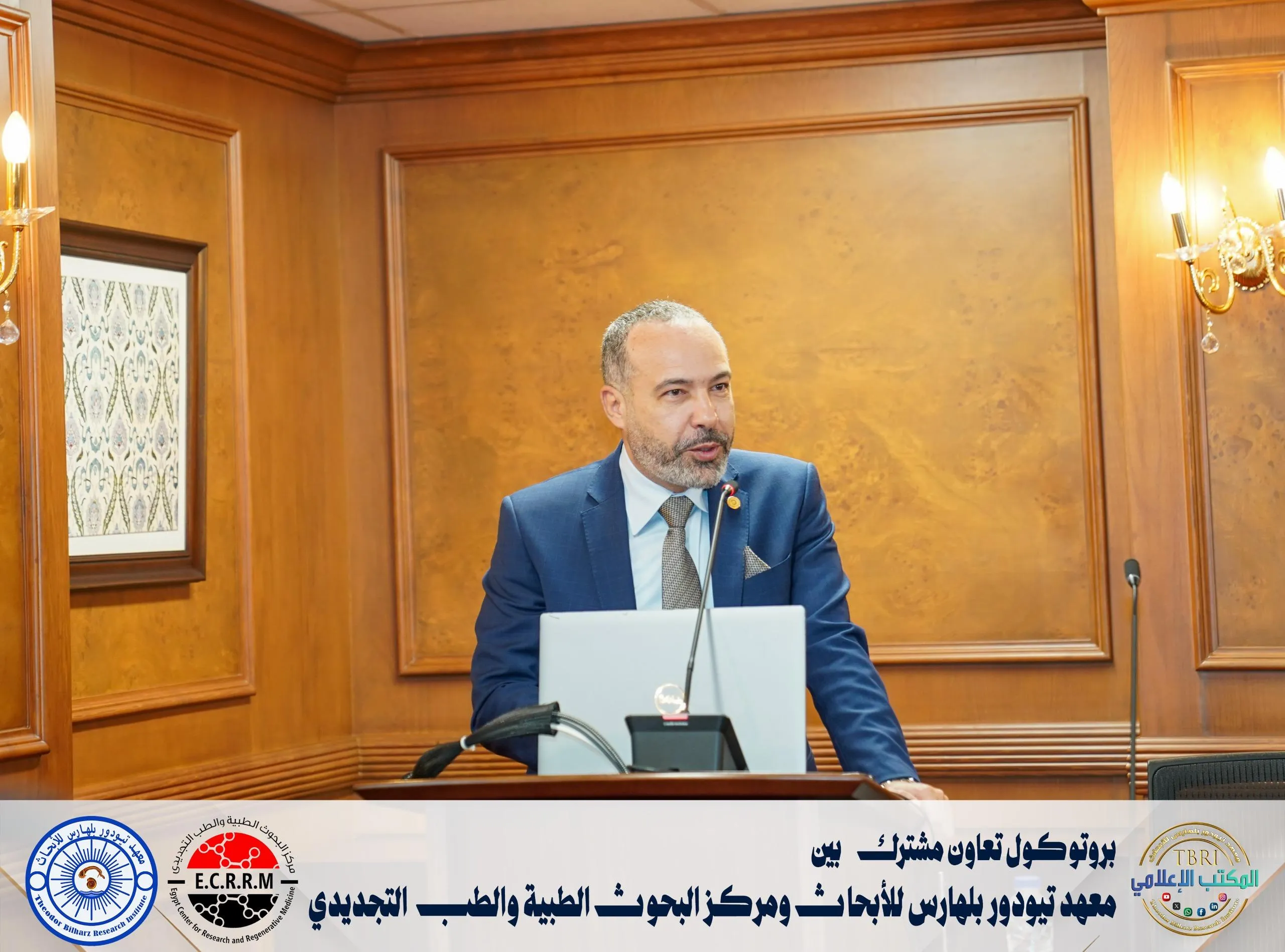
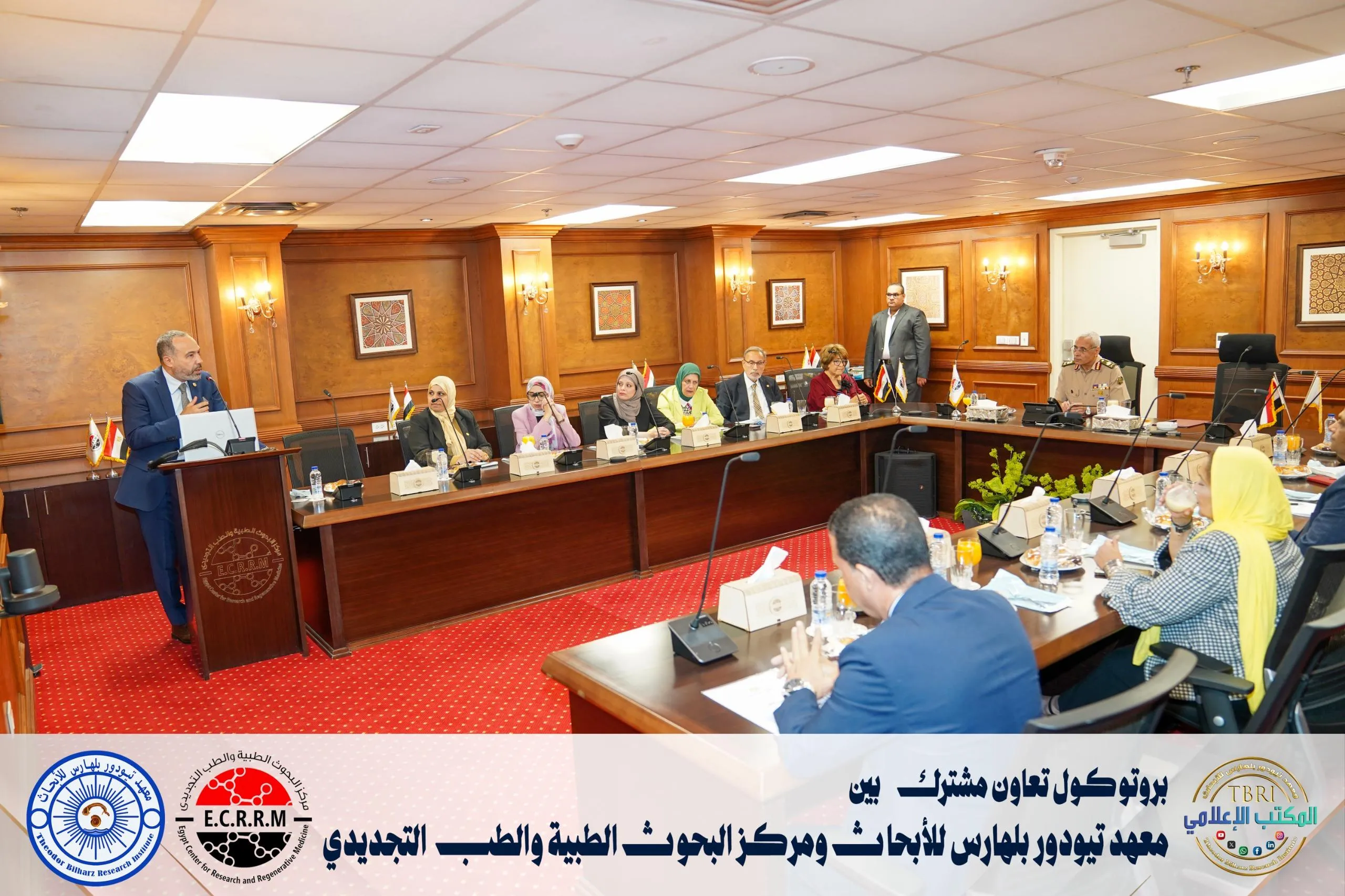
For his part, Prof. Dr. Ahmed Abdel Aziz affirmed that the protocol supports efforts to expand cooperation among national research institutions and promote applied research projects that contribute to improving diagnostic and therapeutic methods. He pointed out that the integration of expertise between Theodor Bilharz Research Institute and the Egyptian Research and Regenerative Medicine Center opens new horizons for developing research and technological capabilities and enhances opportunities to translate research findings into practical applications that serve the healthcare sector and improve the quality of medical services.
He added that this collaboration reflects the Institute's commitment to strengthening the application of scientific knowledge and modern technologies in addressing healthcare challenges. He explained that the next phase will focus on utilizing the outcomes of this partnership to develop innovative solutions to medical challenges, support research with practical impact, and enhance professional competencies, thereby strengthening the ability of national research institutions to contribute to the advancement of the healthcare system.
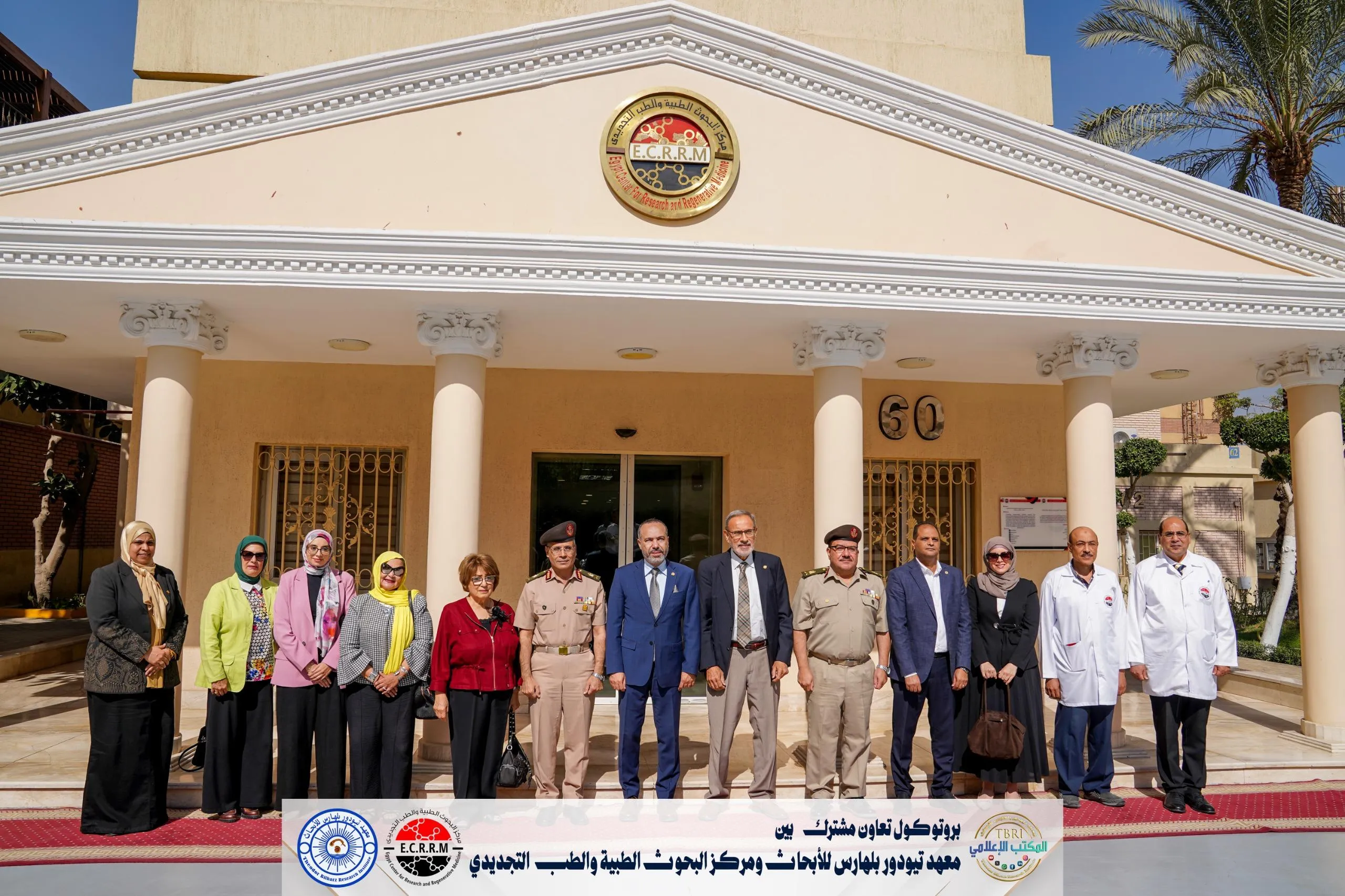
The signing ceremony was attended by a high-level delegation from Theodor Bilharz Research Institute, comprising Prof. Dr. Sanaa Botros, Professor of Pharmacology and Chairperson of the Institute's Research Ethics Committee, Prof. Dr. Azza Saleh, Professor of Clinical and Chemical Pathology and Member of the Supreme Council for Review of Clinical Medical Research Ethics, Prof. Dr. Ahmed El-Baz, Professor of Urology, Prof. Dr. Eman El-Ahwany, Professor of Immunology and Deputy Director of the Biobank Center of Excellence, Dr. Walaa El-Madawy, Assistant Professor of Pharmacology, Dr. Eman El-Wakil, Assistant Professor of Parasitology and Supervisor of the Animal House, Dr. Safia Samir, Assistant Professor of Biochemistry and Supervisor of the Director's Office for External Relations.
This partnership underscores the importance of building sustainable bridges between Egyptian research and medical institutions based on knowledge exchange, resource integration, and capacity development. Such collaboration will create greater opportunities for innovation and enable scientific research to be translated into practical solutions. The protocol is expected to serve as a starting point for joint initiatives and projects that promote research excellence, reinforce the standing of Egyptian scientific institutions, and strengthen their ability to keep pace with global developments, ultimately serving the overarching goal of harnessing science to improve people's lives and quality of life.
Photo Gallery
Recent News
Tags
- مركز البحوث الطبية والطب التجديدي التعاون البحثي الطبي الطب التجديدي البنوك الحيوية Theodor Bilharz Research Institute معهد تيودور بلهارس للأبحاث