

TBRI Strengthens Its International Presence Through an Egyptian–German Scientific Partnership to Support Medical Innovation and Technology Transfer
In a step that reflects Theodor Bilharz Research Institute’s commitment to expanding international scientific cooperation and maximizing the practical impact of its research, and under the patronage of Prof. Dr. Ahmed Abdel Aziz, Acting Director of the Institute and Chairman of its Board of Directors, the Institute continues to strengthen its engagement with leading international research, medical, and industrial institutions. This approach supports the exchange of expertise, opens new avenues for developing innovative solutions to health and environmental challenges, and connects scientific research outcomes with the actual needs of society and productive sectors.
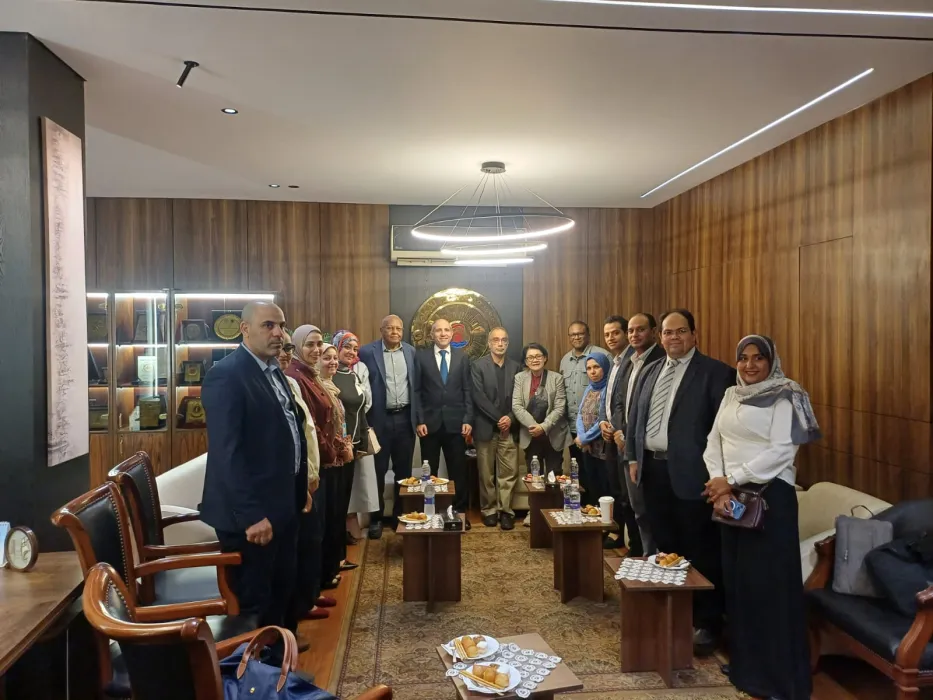
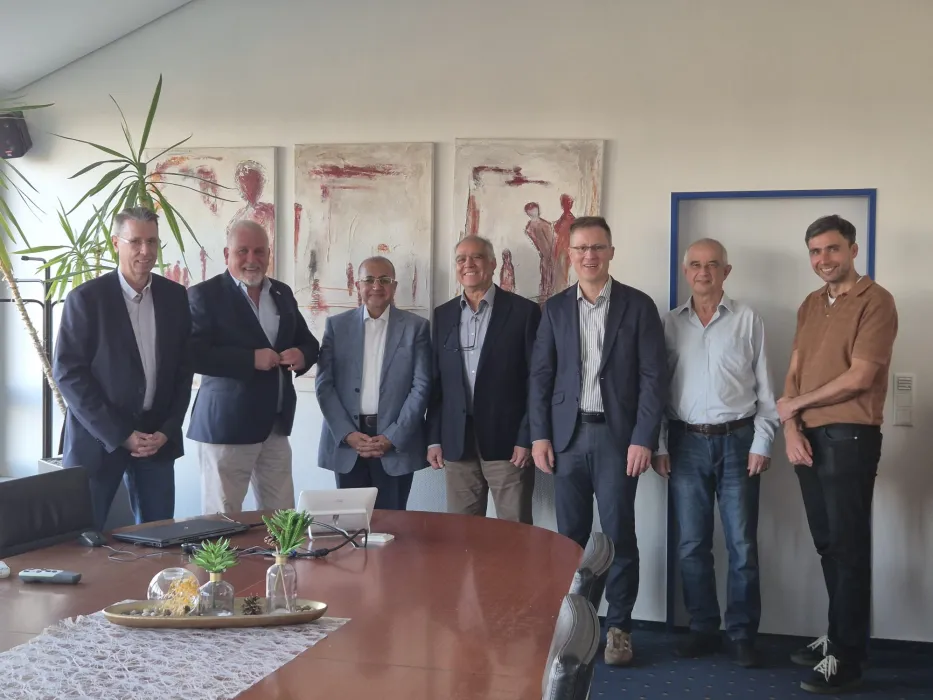
In this context, experts from the Institute participated in an Egyptian–German scientific meeting held in Neuss, Germany, to explore opportunities for establishing joint research projects in biomedicine, biotechnology, and industrial applications. The meeting also examined mechanisms for translating research findings into technologies that can be further developed and applied, enhancing opportunities to leverage Egypt’s scientific capabilities alongside Germany’s specialized expertise.
The Institute was represented at the meeting by Prof. Dr. Mohamed Abbas Shemis, Professor of Biochemistry and Molecular Biology, and Prof. Dr. Mohamed El-Weshahi, Professor of Urology, while Prof. Dr. Ahmed El-Baz, Professor of Urology at the Institute, also participated remotely via videoconferencing.
The meeting brought together several German experts from the medical, research, and industrial sectors, including Prof. Dr. Thomas Otto of Rheinland Klinikum and Director of the Institute for Sustainability in Medicine in Neuss; PD Dr. habil. Dimitri Barski, consultant of urology at Rheinland Klinikum; Prof. Dr. med. Thorsten Ecke, physician in the Department of Urology at Helios Klinikum Bad Saarow; Dr. Ralph Wirtz, representing the industrial sector; and PD Dr. med. Stefan Welter, Head of Thoracic Surgery at DGD Lungenklinik Hemer.
The Egyptian side was also represented by officials from the Egyptian Embassy in Berlin, including Dr. Mona Zakaria, Minister Plenipotentiary for Commercial Affairs and Head of the Commercial Office, and Mr. Mostafa Hassan, Commercial Attaché and Deputy Head of the Egyptian Commercial Office in Berlin.
Discussions focused on identifying collaboration opportunities that would facilitate the transition from laboratory research to medical and industrial applications. This would be achieved by developing projects around clearly defined needs, selecting appropriate technologies, and conducting proof-of-concept studies and validation procedures, thereby increasing the potential for developing practical, scalable scientific solutions.
Molecular diagnostics and liquid biopsies emerged as key areas of interest, alongside the development of innovative methods for detecting bladder cancer and applications in targeted cancer diagnosis and treatment. These fields offer promising opportunities to integrate research and clinical expertise with the capabilities of biotechnology companies, supporting the development of more accurate diagnostic methods and better-targeted therapeutic interventions.
Proposed areas of cooperation also included nanotechnology, advanced biomaterials, and regenerative medicine, particularly the development of research models for studying wound healing and tissue regeneration. The Institute’s expertise in biochemistry, molecular biology, and nanotechnology provides a strong scientific foundation for developing joint projects with German teams specializing in tissue engineering, biomaterials, and advanced cellular models.
The discussions also extended to healthcare sustainability, including proposals for recycling medical plastic waste through mechanical or chemical technologies, as well as exploring ways to reduce energy consumption and carbon emissions. This broadens the scope of cooperation to encompass solutions that combine medical innovation, environmental responsibility, and sustainable industrial development.
The meeting highlights the important role national research institutions play in building bridges for international cooperation, benefiting from advanced expertise and technologies, and directing scientific research toward health and industrial development priorities. It also aligns with the Theodore Bilharz Research Institute’s strategy of strengthening scientific partnerships that go beyond knowledge exchange to developing implementable projects, thereby increasing the practical value of research and supporting innovation and technology transfer.
For his part, Prof. Dr. Ahmed Abdel Aziz, Director of the Institute, emphasized the importance of expanding cooperation with international scientific institutions as a key pathway to advancing the Institute’s research system and strengthening integration between medical research and technological and industrial applications.
This approach builds on the importance of leveraging accumulated research expertise and creating broader opportunities for researchers to participate in joint projects that contribute to developing scientific solutions responsive to the actual needs of the healthcare sector while supporting innovation and sustainable development.
Through its openness to international partnerships and the diversity of its research fields, Theodor Bilharz Research Institute reaffirms its commitment to strengthening the standing of Egyptian scientific research and transforming knowledge into added value for society. These efforts support the advancement of healthcare services, reinforce the role of research institutions in keeping pace with scientific and technological developments, and open new horizons for fruitful cooperation between Egypt and its international partners.